The Arsenal academy is famed around the world for its stellar record of producing first-team players. Bukayo Saka is only one of the latest stars to come off the Hale End production line.
Future Arsenal legends including Paul Merson, Ashley Cole and Martin Keown all learnt their trade with the Gunners. While some products of the north London giants’ academy went on to become heroes elsewhere. Mikel Arteta will hope Saka remains loyal at Emirates Stadium.
Arsenal’s 14 best academy products including Bukayo Saka and a Manchester United legend
Andy Cole broke through at Arsenal but is best known for his legendary spells for Newcastle United and Manchester United. Niall Quinn, too, was a key part of George Graham’s plans at Highbury. But Sunderland fans adore the centre-forward after his iconic career on Wearside.
Tony Adams

| Position: | Centre-half |
| Appearances: | 669 |
| Goals: | 48 |
| Clubs: | Arsenal |
| Years at Arsenal: | 1983-2002 |
There are very few Gunners legends bigger than ‘Mr Arsenal’ himself, Tony Adams, who was also an academy product. The defender emerged from the youth ranks in north London and led the club through a trophy-laden period. He won 10 major trophies over a 19-year career.
Of his 19 years at Highbury, Adams even spent 14 of them as Arsenal’s captain. Graham gave the centre-half the armband during 1987, making Adams the club’s youngest-ever skipper at just 21. He would then retain the role until the day that the defender retired in August 2002.
Simply put, Adams was the ultimate one-club man with his inspirational presence in the side essential for Arsenal’s feats. He helped Graham and Arsene Wenger add four top-flight titles, three FA Cups, two EFL Cups and two Community Shield honours to Arsenal’s trophy record.
Adams’ efforts further saw Graham dub the defender as ‘my colossus’ and Wenger consider him as a ‘professor of defence’. His technical abilities far outweighed most defenders of the era. And his legendary feats all came from joining Arsenal’s academy as a schoolboy in 1980.
David O’Leary

| Position: | Centre-half |
| Appearances: | 722 |
| Goals: | 14 |
| Clubs: | Arsenal, Leeds United |
| Years at Arsenal: | 1975-1993 |
It will be some feat for any player to ever overtake David O’Leary as Arsenal’s all-time record appearance maker. The defender towers over the rest with 722 games for the Gunners from 1975 and 1993. Adams ranks a distant second in the club’s all-time list with his 669 games.
Leeds United ultimately ended O’Leary’s association with Arsenal that began in the academy in 1973. The Republic of Ireland hero moved to north London on apprentice forms two years before making his senior debut at only 17. He burst through three months after his birthday.
O’Leary brought a youthful exuberance into the Arsenal backline that helped pull them clear of relegation. His calming nature also allowed the Gunners to play the ball out from the back at a time when it was rare. His poise also yielded the captaincy for a spell in the early 1980s.
Fans even dubbed O’Leary as ‘Spider’ for his ability at the back that brought pace, unlike the other 6ft defenders of his time. Titles also arrived with O’Leary contributing to two top-flight and FA Cup honours. His last act as an Arsenal player was him lifting the FA Cup at Wembley.
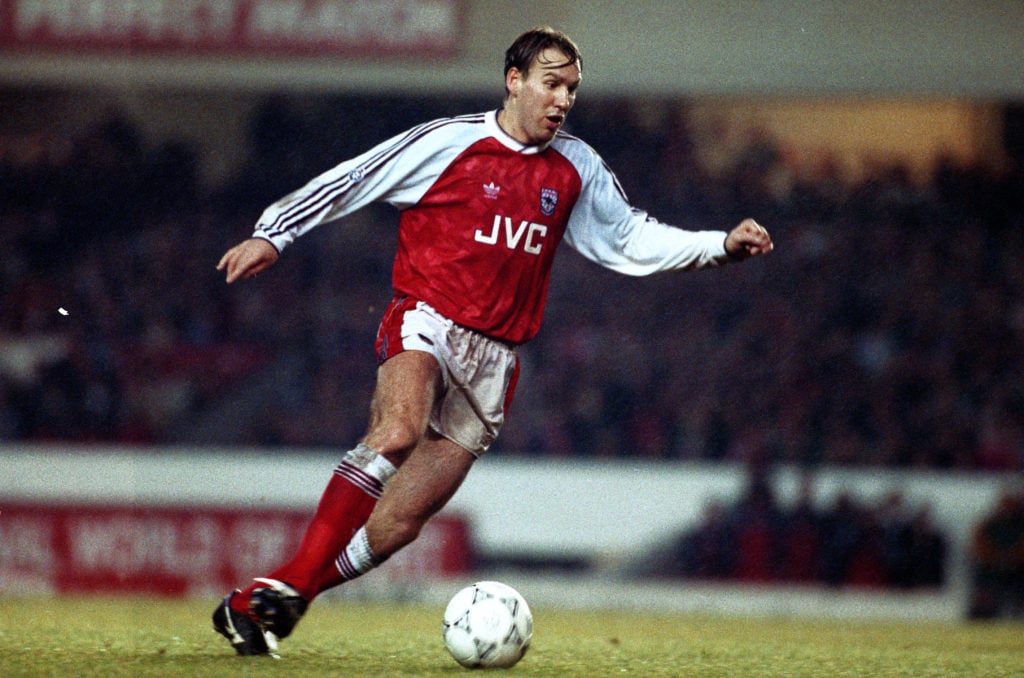
Paul Merson
| Position: | Attacking midfielder |
| Appearances: | 425 |
| Goals: | 99 |
| Clubs: | Arsenal, Brentford (loan), Middlesbrough, Aston Villa, Portsmouth, Walsall, Tamworth, Welshpool Town, Caerau, Hanworth Villa |
| Years at Arsenal: | 1986-1997 |
With an infectious smile, Merson emerged from Arsenal’s academy to become a club legend in the 1980s. The Highbury faithful relished what he showed and Middlesbrough fans would also later dub him ‘The Magic Man’. Merson’s imagination brought flair wherever he played.
Merson could create something spectacular out of nothing and hit the ground running back at Highbury after a spell at Brentford. He scored three goals in five starts after emerging as a centre-forward. His efforts would also seal Arsenal’s first league title in 18 years in 1988/89.
The attacker had become a talisman at Highbury and won the PFA’s Young Player of the Year award, too. Only Adams during 1986/87 had won the award whilst at Arsenal previously and no player would again before Nicolas Anelka in 1998/99. Paul Gascoigne won it in 1987/88.
Form would escape Merson as a striker before moving into a deeper role behind Alan Smith. But the different role saw him dictate proceedings with exquisite passes. His 82 consecutive Premier League games from 1995 to 1997 was even an Arsenal record that stood until 2023.
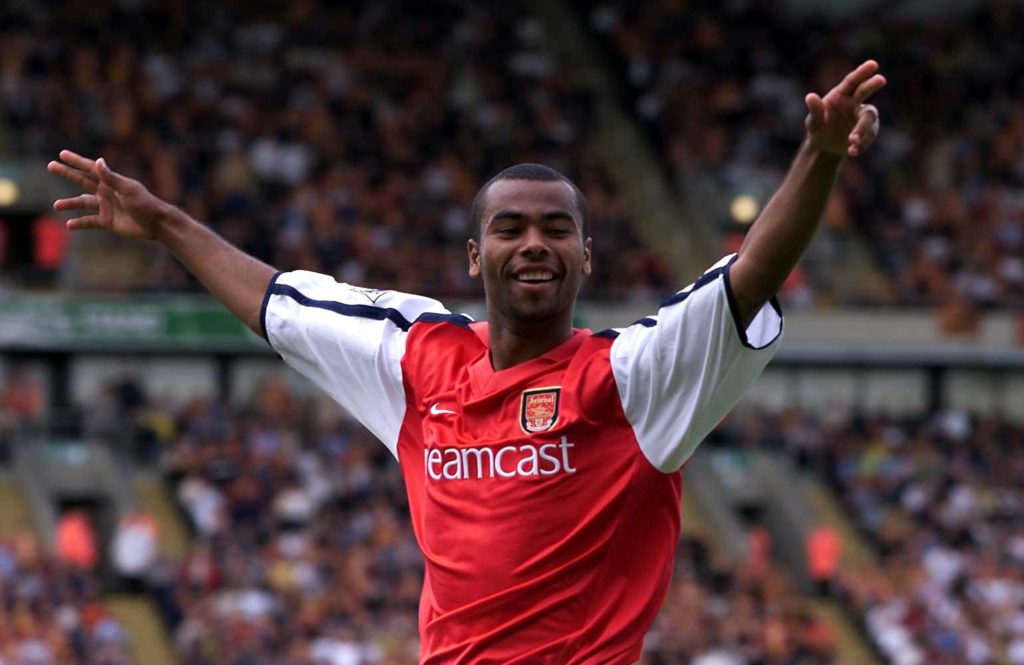
Ashley Cole
| Position: | Left-back |
| Appearances: | 228 |
| Goals: | 9 |
| Clubs: | Arsenal, Crystal Palace (loan), Chelsea, Roma, LA Galaxy, Derby County |
| Years at Arsenal: | 1999-2006 |
Wenger describes selling Cole to Chelsea in 2006 as the ‘regret of my life’. The left-back left Highbury for Stamford Bridge as a two-time Premier League winner and three-time FA Cup champion. But he cemented his status as one of England’s greatest-ever left-backs in Blue.
His time in west London saw Cole add a further Premier League title to his record, as well as four more FA Cups and the Champions League. The Stepney-born star was a sensation on the channel, offering an attacking intent Wenger rued letting go for £5m plus William Gallas.
Arsenal only had themselves to blame for letting an academy alumni turned double-winning defender go to a rival. Iconic vice-chairman David Dein admitted the Gunners ‘didn’t offer him [Cole] the right sort of money’. Chelsea did not make the same error with their newfound riches.
Still, Arsenal fans remember what Cole offered Wenger in high regard. He returned from an early loan spell at Crystal Palace and thrived straight away to displace Sylvinho. His defining moment for Arsenal also came at Tottenham when they celebrated winning the league title.
Martin Keown

| Position: | Centre-half |
| Appearances: | 449 |
| Goals: | 8 |
| Clubs: | Arsenal, Brighton & Hove Albion (loan), Aston Villa, Everton, Arsenal, Leicester City, Reading, Wembley |
| Years at Arsenal: | 1985-1986, 1993-2004 |
It was not love at first sight when Keown joined the first-team ranks from Arsenal’s academy in 1985. But after seven years away and stints at Aston Villa and Everton, the defender came home in 1993. It saw the Oxfordshire native be the first player to re-join Arsenal since WWII.
The Gunners’ decision to welcome Keown back home proved a gift that kept on giving in the next 11 years. He made that first campaign of senior football a distant memory to become a key cog in Graham’s plans. The Arsenal boss relished Keown’s pace to even play in midfield.
Keown could keep pace with the fastest forwards around and used his forceful challenges to snare possession. Wenger’s arrival at the helm in 1996 then, finally, delivered the silverware his skill deserved. Keown was cup-tied as Arsenal lifted the 1993 FA Cup and League Cup.
Under Wenger, Keown helped Arsenal take the 1997/98 Premier League and FA Cup double. He even overcame injuries to do the double again in 2001/02. Yet the best honour was still to come as Keown made his last outing as Arsenal finished the Invincibles season in May 2004.
Ray Parlour

| Position: | Right, attacking midfielder |
| Appearances: | 466 |
| Goals: | 32 |
| Clubs: | Arsenal, Middlesbrough, Hull City, Wembley |
| Years at Arsenal: | 1992-2004 |
The ‘Romford Pele’ was arguably underrated by most outside of Arsenal during Ray Parlour’s career at Highbury. Yet Gunners fans revered what the midfielder offered on their right-wing or through the middle. His tenacity and loyalty made his graduation from the academy stick.
Parlour even earned his nickname from Marc Overmars and ran the show when Arsenal won away to Liverpool in August 1992. Anfield was the scene of Parlour’s nightmare senior debut just seven months earlier. He conceded a penalty as the Reds were 2-0 winners in January.
Graham respected the grit that Parlour gave his engine room as it let Merson and Ian Wright produce magic. But it was under Wenger when Parlour’s presence in the Gunners’ first-team exploded. He even took home the Man of the Match award as they won the FA Cup in 1998.
The FA Cup saw Parlour at his absolute best again in the 2002 final as Arsenal beat Chelsea 2-0 in Cardiff. He broke the deadlock on 70 minutes with a dipping drive into the top corner of Carlo Cudicini’s net. Parlour made the Blues pay for backing off after bursting up the field.
Pat Rice

| Position: | Right-back |
| Appearances: | 528 |
| Goals: | 13 |
| Clubs: | Arsenal, Watford |
| Years at Arsenal: | 1967-1980 |
Pat Rice is as modest as he was spectacular after breaking out of Arsenal’s academy to turn into one of the club’s greatest legends. The Northern Ireland icon was loved at Highbury for his endless hard work, too. And his legend status only intensified after returning as a coach.
Arsenal moved instantly to get Rice back into the fold when he retired with Watford in 1984. The Gunners appointed their former right-back as a youth coach, before he stood in as their first-team boss before Wenger arrived in 1996. Rice spent the next 16 years beside Wenger.
It brought the curtain down on a combined 44-year association with Arsenal after joining as an apprentice in 1964. Yet Rice’s career for the club almost never developed as he struggled at first. But Rice worked harder than anyone else to develop his tackling, speed and passing.
The success his determination deserved would arrive instantly in 1970/71 as Rice became a first-team regular. Arsenal won the Division One and FA Cup double that term for their first league title since 1953. While the FA Cup final was the first of Rice’s five, but he won in two.
Departures for some of Arsenal’s leading lights saw the club slip to relegation contenders in the mid-1970s. But Rice stayed and he was their obvious choice to become captain in 1977. His authority then brought the good times back with three-straight FA Cup finals until 1980.
Michael Thomas
| Position: | Central midfielder |
| Appearances: | 208 |
| Goals: | 30 |
| Clubs: | Arsenal, Portsmouth (loan), Liverpool, Middlesbrough (loan), Benfica, Wimbledon FC |
| Years at Arsenal: | 1987-1991 |
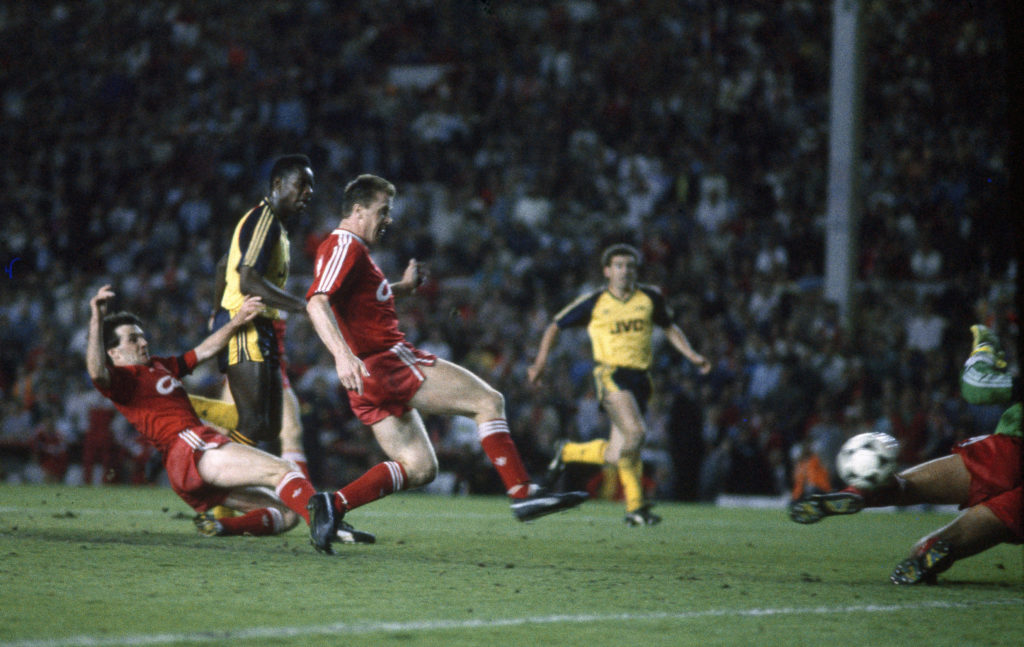
Michael Thomas emerged out of Arsenal’s academy and scored one of the club’s most iconic goals in May 1989. Just two years after breaking into their senior set-up, it was Thomas who delivered the all-important goal that secured the Gunners the First Division title at Liverpool.
The unforgettable words of ‘Thomas, charging through the midfield… It’s up for grabs now! Thomas! Right at the end!’ are etched into Arsenal’s history forevermore. He burst through the Reds at Anfield to latch onto Smith’s lay-off and end the Gunner’s 18-year title drought.
Arsenal needed to win by two clear goals on Merseyside to dethrone Liverpool and led via Smith’s second-half header. But the title was still the Reds’ to lose before Thomas fired past Bruce Grobbelaar in the dying seconds. It made the midfielder an instant legend at Arsenal.
Thomas was just 21 years old when he scored that effort and had only broken into Graham’s side in 1987. He first joined Arsenal as a schoolboy in 1982 before getting professional terms in 1984. Thomas even made his senior debut against Tottenham in an EFL Cup semi-final.
Cesc Fabregas

| Position: | Central midfielder |
| Appearances: | 303 |
| Goals: | 57 |
| Clubs: | Arsenal, Barcelona, Chelsea, AS Monaco, Como |
| Years at Arsenal: | 2003-2011 |
He may have only had a brief stint in Arsenal’s academy, but Cesc Fabregas proved age is just a number when he made his senior debut in October 2003. The midfielder headed for north London from Barcelona in September 2003 and Wenger quickly realised his potential.
Fabregas burst onto the senior stage at 16 years and 177 days, which was an Arsenal record then. He broke through in an EFL Cup fixture against Rotherham United at Highbury. Another club record would also go his way in December 2002 when Fabregas scored against Wolves.
The Spaniard’s elegant technique was evident straight away. But it was after Juventus signed Patrick Vieira that Fabregas stepped up. He took up the Frenchman’s mantle and featured in UEFA’s 2006 Team of the Year. So, Fabregas was a natural fit to become the captain in 2008.
Wenger replaced Gallas as the Gunners’ skipper with the Spaniard, who had just helped his nation win Euro 2008. The PFA also named Fabregas as its Young Player of the Year over the 2007/08 season. While a World Cup winner’s medal also arrived in South Africa come 2010.
Arsenal product Fabregas would become a Chelsea hero
Fabregas helped La Roja to their maiden FIFA title on the back of reaching new heights with Arsenal. Wenger’s shift to a 4-3-3 formation unlocked a new level from the midfielder as he became a fierce threat in the final third. But his efforts led to a return to Barcelona in 2011.
It was not to be the homecoming that Fabregas wanted, however. Despite winning a La Liga title and the Copa del Rey following a £35m transfer, he was never quite the talisman he was for Arsenal. So, Fabregas returned to England in 2014 as Chelsea paid the Blaugrana £30m.
Stamford Bridge would become his playground as Fabregas won the Premier League title in his debut season. The trophy eluded him at Arsenal with Fabregas’ only title under Wenger being the 2004/05 FA Cup. But he added a second in 2016/17 and the FA Cup again in 2018.
Fabregas was, simply, one of the Premier League’s finest midfielders of a generation. While his career took him to AS Monaco and Como before retiring in 2023. The Euro 2012 winner and 110-cap maestro offered 50 goals and 118 assists in 350 career Premier League games.
David Rocastle

| Position: | Attacking midfielder |
| Appearances: | 277 |
| Goals: | 34 |
| Clubs: | Arsenal, Leeds United, Manchester City, Chelsea, Norwich City (loan), Hull City (loan), Sabah |
| Years at Arsenal: | 1985-1992 |
The footballing world lost a great in March 2001 when David Rocastle lost his fight with non-Hodgkin’s Lymphoma. It was a sign of the respect that ‘Rocky’ commanded in the game that Tottenham and Arsenal fans stood together before a north London derby to remember him.
Rocastle was a much-loved member of Arsenal’s 1989 title-winning team. He also had spells at Leeds United, Manchester City and Chelsea later on in his career. The Gunners named the indoor centre at their London Colney training ground after academy graduate Rocastle, too.
Fellow Arsenal icon Wright considered Rocastle a ‘hero’.
His talent on the pitch shone through from an early stage, as well, as Rocastle forced a place in Don Howe’s side. He also played in each game of Arsenal’s 1988/89 title-winning season with blistering pace. While Rocastle’s vision would take Graham’s side to the top in 1990/91.
Bukayo Saka
| Position: | Right winger |
| Appearances: | More than 185 |
| Goals: | More than 40 |
| Clubs: | Arsenal |
| Years at Arsenal: | 2018-present |
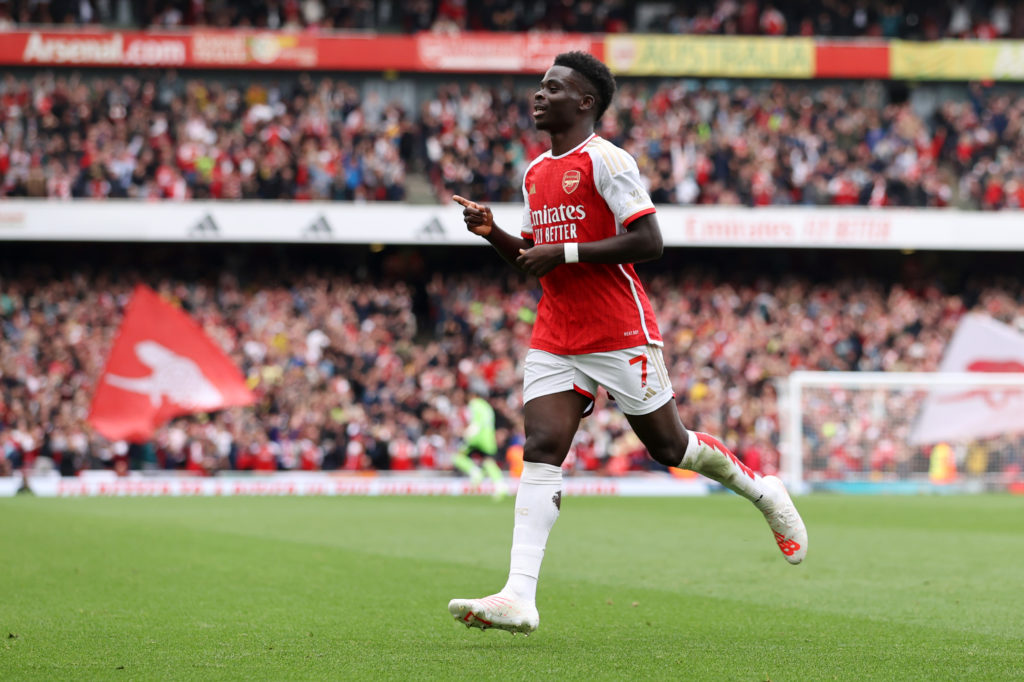
Unai Emery only lasted 18 months in charge of Arsenal after replacing Wenger at their helm in 2018. But Gunners fans owe a debt of gratitude to the Spaniard for giving Saka his senior debut in November 2018. He brought the forward through aged 17 for a Europa League tie.
Since then, Saka has developed into one of Arsenal’s most important players under Arteta at Emirates Stadium. Arteta gave the Hale End graduate his true breakthrough in north London and has never looked back. Now, Saka is also one of England’s most dangerous wide players.
READ MORE: Everything to know on Arsenal’s Bukayo Saka from his age, parents and house
Saka nearly emerged as Arsenal’s new star left-back under Arteta as they won the FA Cup in 2019/20. His pace and creativity from the channel produced brilliant results. But, with time, Arteta switched the Ealing-born ace over to the right flank and relishes the devasting effects.
Defenders often endure nightmares trying to defend Saka without fouling the 5 ft 10 star. He can torment full-backs with his pace and trickery with ball control exceeding his years. While Saka will jump at any chance to cut inside and shoot with one of the finest left foots around.
Andy Cole
| Position: | Centre-forward |
| Appearances: | 1 |
| Goals: | 0 |
| Clubs: | Arsenal, Fulham (loan), Bristol City, Newcastle United, Manchester United, Blackburn Rovers, Fulham, Manchester City, Portsmouth, Birmingham City (loan), Sunderland, Burnley (loan), Nottingham Forest |
| Years at Arsenal: | 1989-1992 |
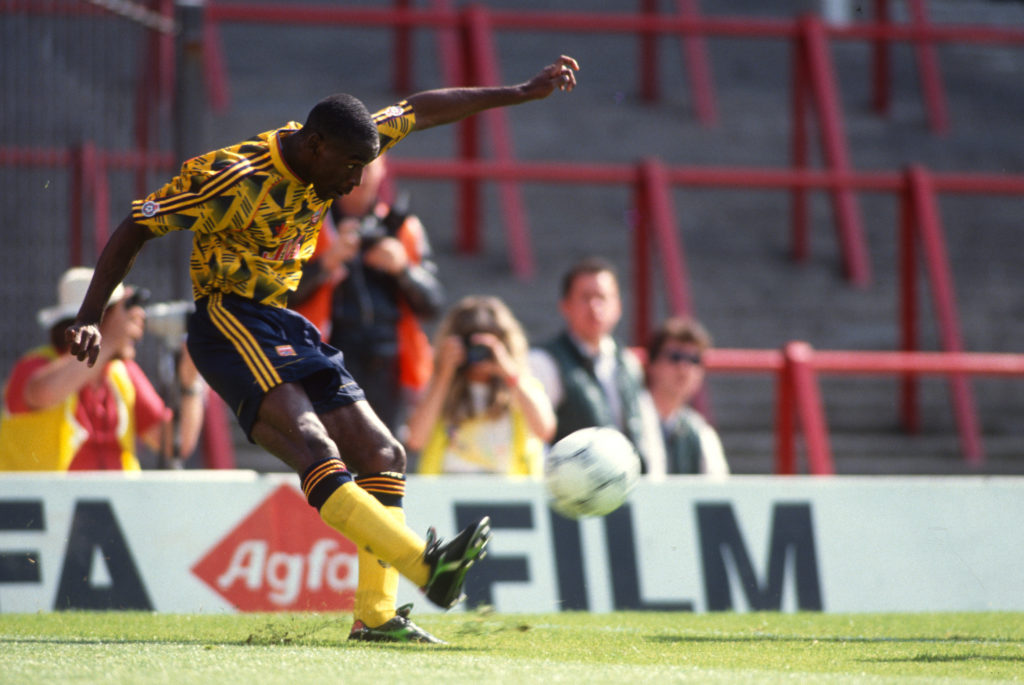
Cole joined Arsenal’s academy upon leaving school in 1988 and soon earned professional terms in October 1989. His senior debut also arrived in December 1990 at home to Sheffield United. But the second-half cameo in a 4-1 win proved to be his sole outing for the Gunners.
Arsenal loaned Cole out to Fulham and Bristol City before he joined the Robins permanently for £500k in July 1992. Yet his efforts at Ashton Gate led to a transfer to Newcastle in March 1993 for £1.75m. And after one iconic spell, another legendary spell awaited at Old Trafford.
The Gunners’ loss was very much to Newcastle and Manchester United’s game as Cole fired home prolifically away from Arsenal. Through the 1993/94 season alone, he scored 41 times for the Toon. He also struck 12 in 12 games after joining mid-way through the 1992/93 term.
But Cole excelling at St James’ Park tempted Sir Alex Ferguson to pay £7m in January 1995 for his signature. The forward’s 11 goals during the 1995/96 season then helped Manchester United beat Newcastle to the Premier League title. Further honours continued to arrive, too.
By the time that Blackburn Rovers spent £7.5m for Cole in December 2001, he won a further four top-flight titles. The Red Devils also won the FA Cup twice and the Champions League in 1998/99 as part of a treble. Cole scored 24 goals in 50 games in all competitions that term.
Niall Quinn
| Position: | Centre-forward |
| Appearances: | 93 |
| Goals: | 20 |
| Clubs: | Arsenal, Manchester City, Sunderland |
| Years at Arsenal: | 1983-1990 |
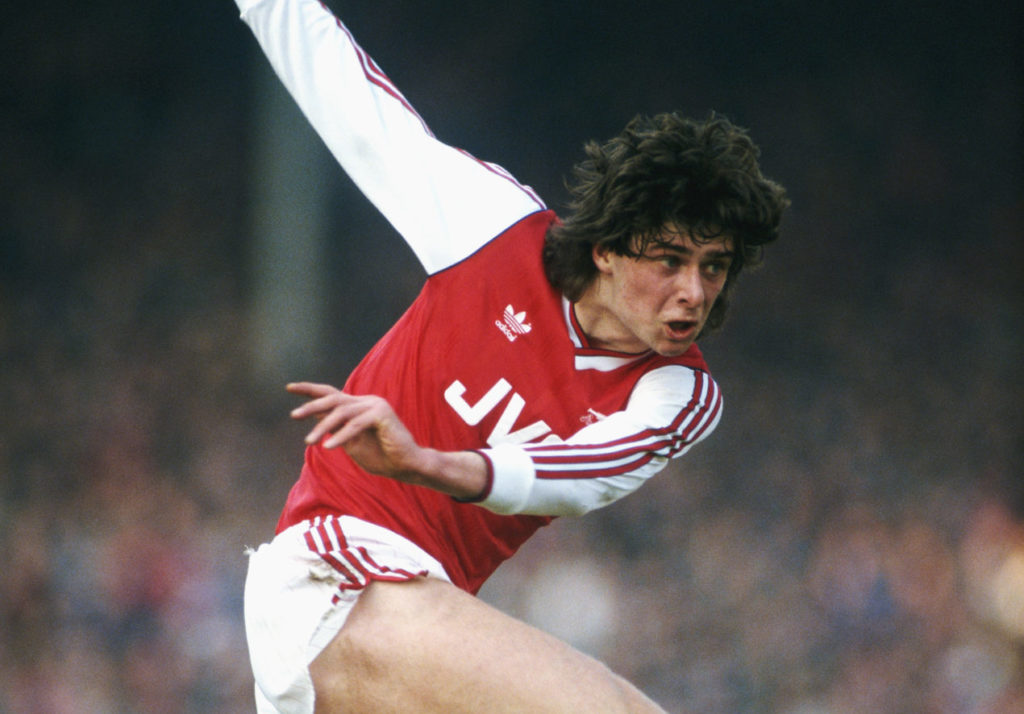
When Fulham passed on an opportunity to sign Quinn after a trial in his youth, Arsenal took a chance. The Gunners welcomed the Dublin native into their set-up and let him develop for a few years. But after impressing with the club’s reserves, his senior debut followed in 1985.
It was a goalscoring start, too, as Quinn scored at home to Liverpool shortly after turning 17 years old. Graham then afforded the attacker a regular senior role the season after once he took charge. But Quinn could not maintain his progress and joined Manchester City in 1990.
The Citizens paid £700k for Quinn, who had won the EFL Cup at Arsenal in 1987 and had 13 caps for Ireland. Six successful years then followed at Maine Road. Quinn went from hitting 20 goals in 93 games in north London to 76 in 240. It tempted a record move to Sunderland.
Quinn’s form convinced Sunderland to pay a club-record £1.3m in 1996. It would very much be money well spent, though. Quinn and Kevin Phillips formed a lethal attack that solidified the Black Cat’s presence in the Premier League after helping to secure promotion in 1999.
Sunderland fell out of the Premier League during Quinn’s first season on Wearside. But he stayed and helped the Black Cats return to the top-flight two years later. Quinn also briefly served as Sunderland’s caretaker manager in 2006 before his five years as their chairman.
Jack Wilshere
| Position: | Central midfielder |
| Appearances: | 197 |
| Goals: | 14 |
| Clubs: | Arsenal, Bolton Wanderers (loan), AFC Bournemouth (loan) West Ham United, AFC Bournemouth, Aarhus Gymnastikforening |
| Years at Arsenal: | 2008-2018 |
Despite making almost 200 first-team appearances for Arsenal, Jack Wilshere’s career at the Gunners is one of the club’s biggest what-if stories. Without his injuries, the midfielder could have become the captain. He may even have captained England if his career stayed on track.
Wilshere was one of the Three Lions’ finest midfielders at his peak and on course to be a key light. But his peak was only brief as injuries ruined what might have been a sensational spell. They would also, ultimately, cost the academy product his career with Arsenal in June 2018.
Emery made it clear to Wilshere upon replacing Wenger that he did not see the midfielder playing a key role. So, the Hale End hero signed for West Ham United as a free agent. But a move to London Stadium only yielded 19 appearances in two years as his issues continued.
Injuries prevented Wilshere from becoming an Arsenal legend
Hope was high for what could have been for Wilshere at an early age after joining Arsenal’s academy aged nine. He also made his senior debut in a Premier League win over Blackburn Rovers aged 16 and 256 days. It made him Arsenal’s youngest-ever league player until 2022.
Wilshere coped with the expectations, though, and helped Arsenal win the FA Youth Cup in 2008/09. He would also help them win the FA Cup in 2013/14 and 2014/15. While the PFA named Wilshere as its Young Player of the Year and in the Team of the Season for 2010/11.
Even Arsenal named Wilshere as their Player of the Season for 2010/11 as the academy gem became a first-team star. But his problems then started in July 2011 as Wilshere suffered a stress fracture in his ankle against New York Red Bulls during the pre-season Emirates Cup.
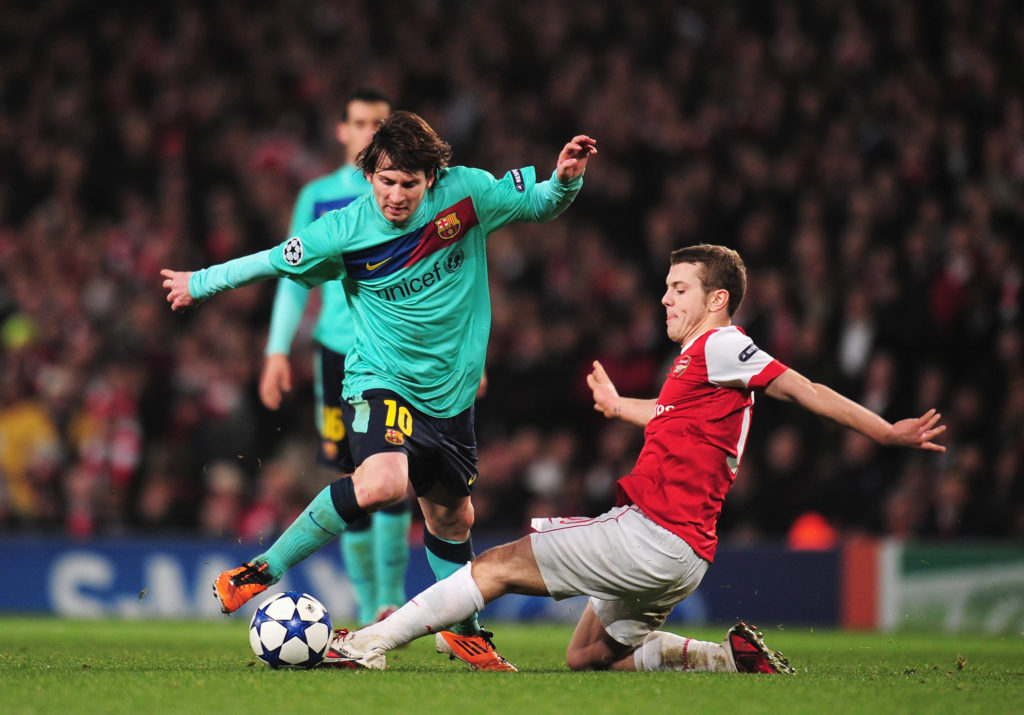
The injury sidelined Wilshere for the entire 2011/12 season to Arsenal’s dismay. He was the best player on the pitch when the Gunners beat Barcelona in February 2011 at only 19. But despite returning to deliver further MOTM displays, injuries eventually saw him retire at 30.