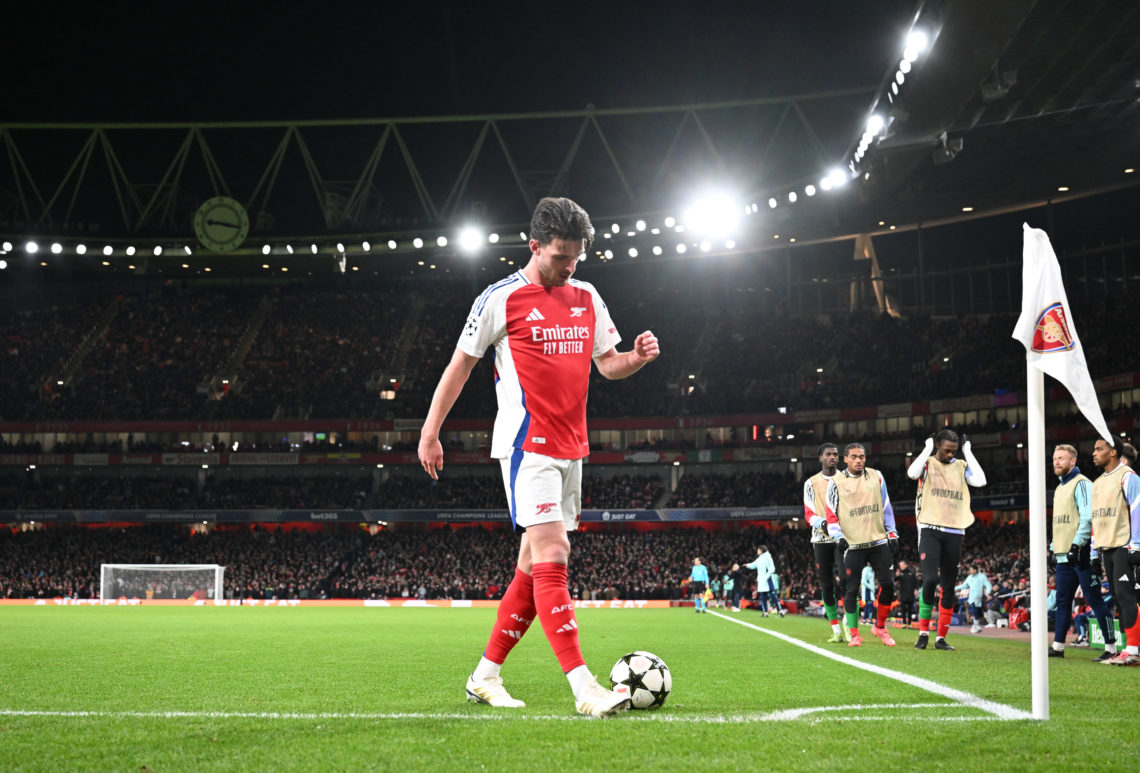


Arsenal were able to record a 3-0 Champions League victory over Monaco at the Emirates Stadium on Wednesday night.
All three of the Gunners’ goals came from open play, as Bukayo Saka bagged a brace and Kai Havertz scored late on.
However, Mikel Arteta will feel that his side ought to have scored far more. Arsenal’s finishing was criticised in the wake of this fixture, as Martin Odegaard, Gabriel Jesus, and Gabriel Martinelli were all guilty of spurning opportunities.
Overall, though, it may have come as something of a relief to Arsenal fans to see the team carving out clear chances from open play again, as they had struggled to do so against Fulham last time out in the Premier League.

How Monaco defended Arsenal set-pieces
Arsenal have been hailed for their set-piece prowess this season, and rightfully so. Since the start of the last campaign, no Premier League side has scored more set-piece goals than the Gunners.
However, on the Champions League stage, Monaco looked to have found a way of nullifying the North London club’s threat in these situations.
Whenever the hosts were awarded a corner, the French side left three players up the pitch, on the edge of the Arsenal half. This is more players than would usually be kept in such an advanced position. However, it forced Arsenal to match Monaco’s manpower in that part of the pitch.
Arteta’s side would hold three players back to mark the Monaco players, meaning that they couldn’t get everyone forward to attack the corner. This meant that Arsenal set-piece coach Nicolas Jover was unable to overload the opposition penalty area, and the Gunners’ corner kicks were subsequently dealt with comfortably.
How can Nicolas Jover adapt?
If Premier League clubs adopt this approach, then Arsenal may find that their set-piece superpower quickly becomes compromised, unless Jover instigates changes to his standard routines.
One option the French coach has, if Arteta can be convinced to take the gamble, is to ignore the more advanced opposition attackers, and push as many players forward for corners as usual.
This would be a risky gambit, though, as it would leave the Gunners exposed to being hit on the break and outnumbered in their own territory.
Alternatively, Arsenal can try to create more space in the opposition penalty area by playing corners short in an effort to lure defenders away from goal and towards the ball before whipping a delivery in.
Receive a digest of our best Arsenal content each week direct to your mailbox