

Arsenal owner Stan Kroenke is much less public-facing than his son, Josh, at the Emirates Stadium these days. But when it comes to the biggest decisions, Silent Stan is still the big cheese.
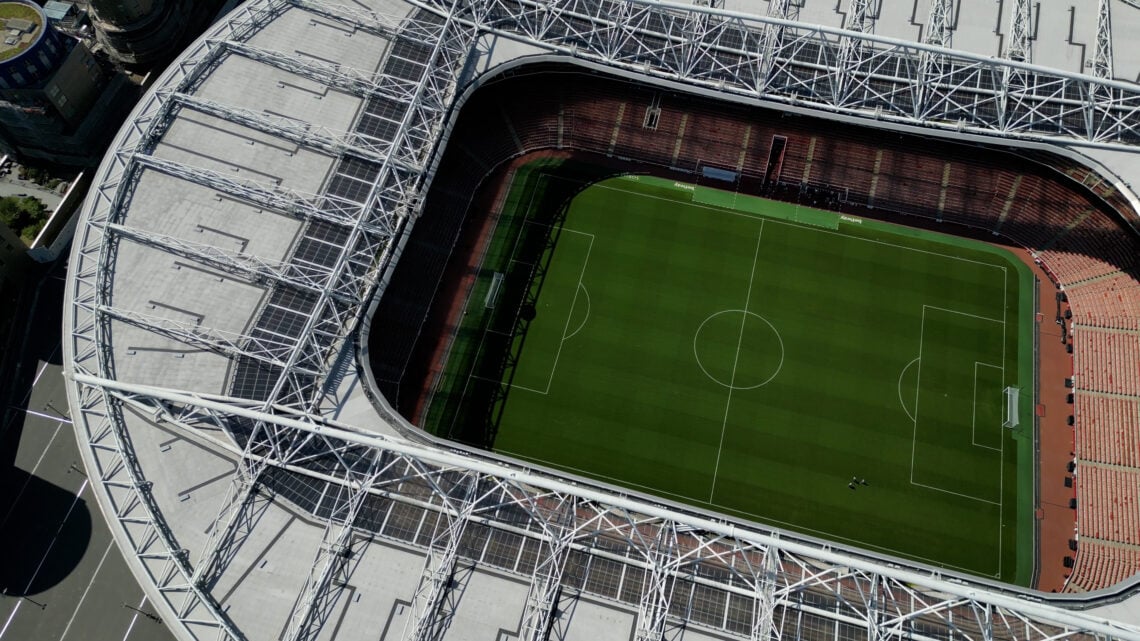
The future of the Emirates Stadium certainly falls into that category. Arsenal are looking to expand the stadium, a little after two decades on from their move from Highbury.
The Emirates has just witnessed indisputably its best Arsenal season. Not long ago, the Emirates was characterised as an unintimidating venue, but that couldn’t have been further from the truth in 2025-26, just as Mikel Arteta intended with his rallying cries to fans and tweaks to the matchday experience.
Upgrading the Emirates, then, will be a delicate balancing act.
What capacity should Arsenal expand the Emirates Stadium to?
70k is on the cards, but should we be aiming BIGGER?

For the Kroenkes, they are old hands at this sort of thing. For every dollar Stan Kroenke has earned from sport, he has likely earned two or three from real estate.
He is the man whose money paid for Los Angeles’ SoFi Stadium, which will host blue-chip matches at this summer’s World Cup and is widely considered the best stadium of its size in the world. In Denver, home of Kroenke’s NBA and NHL franchises, Kroenke has also transformed Ball Arena. Further back in time, he did similar with Dick’s Sporting Goods Park, where his Colorado Rapids MLS side play. The 78-year-old is a guy you can trust with commercial infrastructure projects.
But his massive feats of capital expenditure have not been without controversy.
His LA Rams side moved into the SoFi after relocating from St Louis, a move which ultimately saw the NFL compensation St Louis to the tune of $790m. And more recently, SoFi Stadium’s executives have clashed with the local authorities in Inglewood, too.
Only last week, Kroenke’s legal team filed a $400m (about £300m) lawsuit against the City of Inglewood for not reimbursing him for upgrades made to the complex surrounding SoFi, which they say they are obliged to do under the terms of their agreement. Inglewood argue that the contract is void.
But it does raise an interesting question: could public funds be used to pay for a chunk of the Emirates Stadium 2.0?

In the UK, grants for private projects are handed out much less readily, but it is a trend for sports teams to angle for them when building or expanding stadia.
However, speaking exclusively to Arsenal Insider, football finance expert Professor Kieran Maguire explained that Arsenal’s geography might make their case, in which costs are projected to exceed £500m, more difficult.
“Arsenal’s build is a challenging one because you have so many football clubs in London who are under the local government’s jurisdiction.
“Given the negative experience the taxpayer has had with West Ham and the London Stadium, there might be an economic argument for public money, but the political argument is far weaker. In a modern environment where discourse is polarised, it will be difficult to get political support because people will say the money would be better spent elsewhere.
“Football clubs are effectively open for business for 30 days annually, but the taxpayer will want their money going to something which is generating revenue 365 days per year.
“So I don’t anticipate that there will be much appetite for public money to be made available to Arsenal.”
Receive a digest of our best Arsenal content each week direct to your mailbox