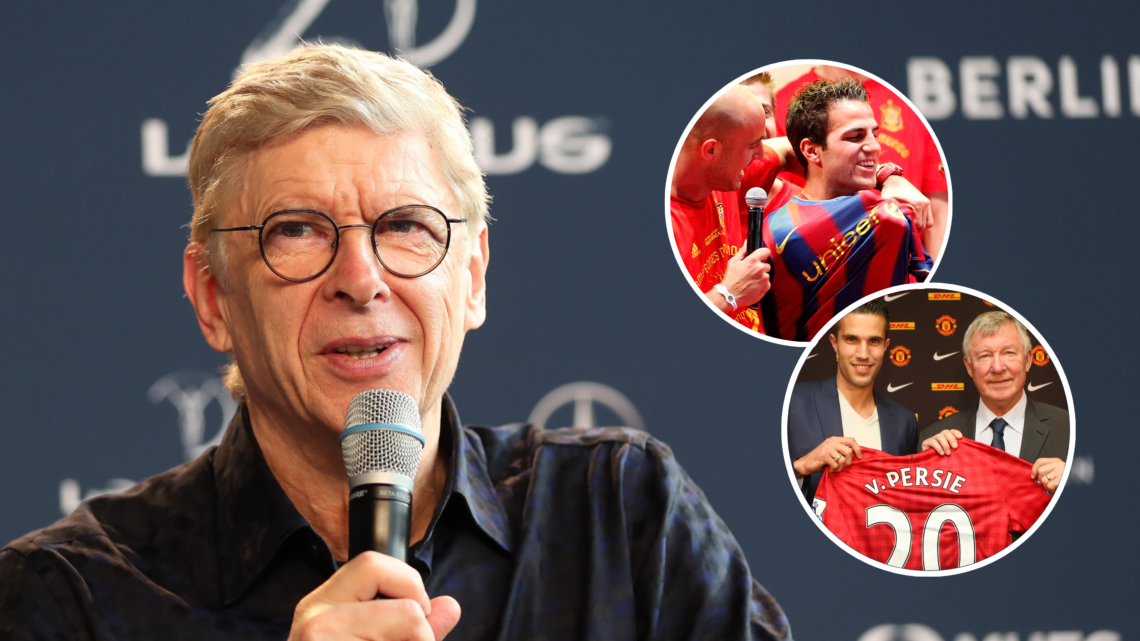

Former Arsenal boss Arsene Wenger has revealed the player he regretted selling the most at the Gunners ahead of the likes of Cesc Fabregas and Robin van Persie.
During his 22-year tenure at the club, the Frenchman became renowned for selling the best talent at crucial stages, in particular following the move to Emirates Stadium in 2006.
He sold a grand total of 389 players with some high-profile players and controversial sagas springing to mind.
However, the 74-year-old garnered some criticism for not getting the right fee for his stars, only selling 15 players for more than £15 million with Alex Oxlade-Chamberlain topping the list.
READ MORE: Arsenal’s most expensive transfer sales of all-time ranked including four £25m exits
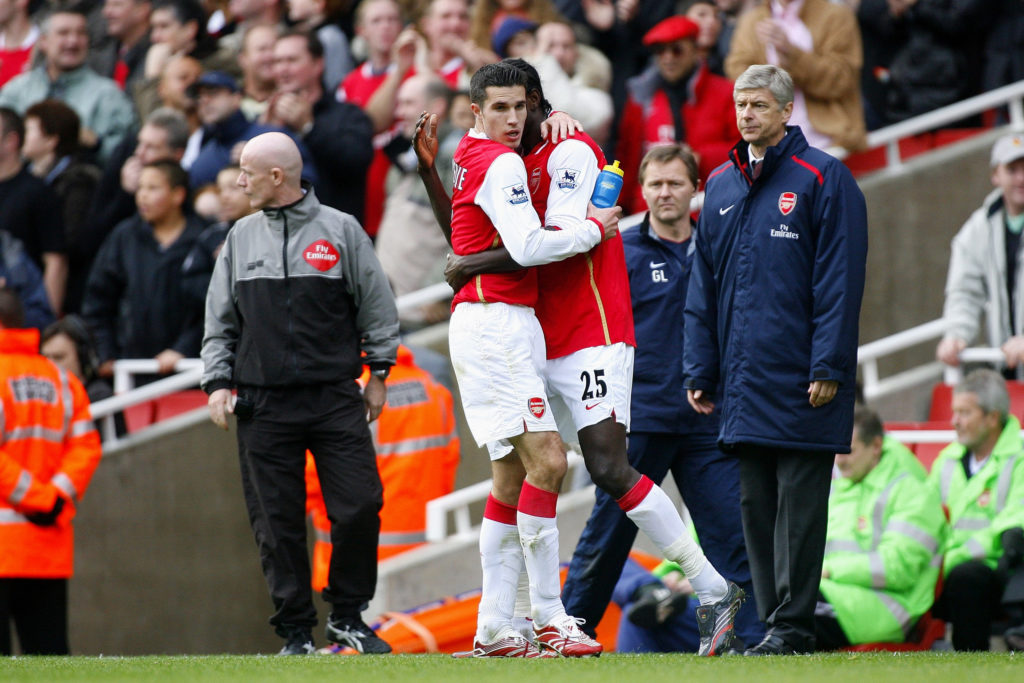
High-profile Arsenal exits regretted by Arsene Wenger
Club legend Thierry Henry’s exit to Barcelona was a tough pill to swallow for every Arsenal fan at the time, leaving for £16.1 million in 2007, shortly after current owner Stan Kroenke (KSE) first invested.
Captaincy became cursed at Arsenal after consecutive captains decided their futures lay elsewhere.
The Fabregas to Barcelona saga was long-winded, but the influential midfielder eventually got his move in a deal worth around £35 million, after being adorned in the red and blue by future teammates after the Spanish World Cup 2010 victory.
Gael Clichy, Samir Nasri, Emmanuel Adebayor and Kolo Toure all left for Manchester City in the space of two years.
In the form of his life, Van Persie opting to sign for Sir Alex Ferguson and Manchester United for £22.5 million was a huge swing in the 2012/13 title race. But Wenger says he regrets a sale in 1999 the most.
READ MORE: Gary Lineker recalls hilarious story about Arsene Wenger right before he joined Arsenal
Wenger reveals selling Nicolas Anelka was his biggest regret
During a 2021 charity event in aid of the Twinning Project, in the company of former Arsenal co-owner and vice-chairman David Dein, the boss spoke on transfer dealings: “Yes, we used the Wenger card and players wanted to go to where they would win.
“My biggest regret and shame is that [Nicolas] Anelka left. He could have been special, instead, he played for 13 clubs.”
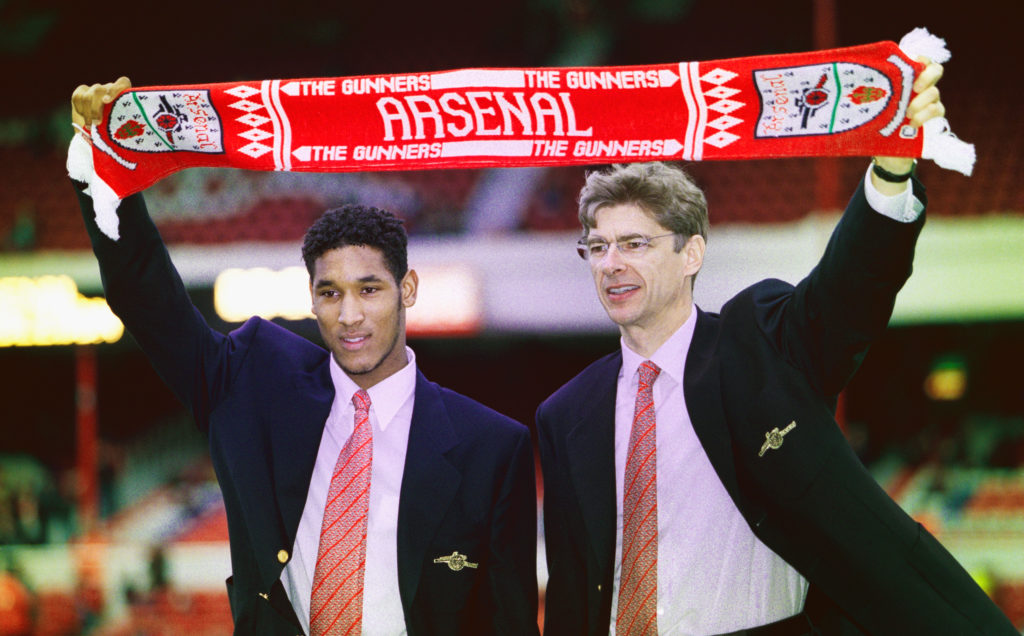
As the first signing of the Wenger era, the French forward joined for £500,000 at the age of 17 from Paris Saint-Germain, making only four Premier League appearances in his first season.
Injury to Ian Wright gave the Frenchman a way into the starting team and he took his chance, eventually ending the 1998/99 season with 17 goals in 35 games.
He received PFA Young Player of the Year for his efforts, but the tide turned dramatically on Anelka’s stint at Arsenal, earning the nickname ‘Le Sulk’ after he hit out at the British press and claimed he was ‘bored’ with life in London.
Before the start of the next season, he pushed through a move to Real Madrid for £22.3 million despite Arsenal’s best wishes. A staggering £21.8 million in profit for the Gunners.
Anelka later said that he believes he should never have left Arsenal when he did, saying they’re a club he has a ‘great love’ for.
He went on to play for 11 more clubs after his stint at Arsenal, retiring at Mumbai City in 2015.
There are many more players who regretted leaving Wenger’s Arsenal when they did, namely the likes of Alexander Hleb and Alex Song, but the boss always emphasised that the grass is not always greener.
Speaking amid rumours of Vieira’s exit in 2004, Wenger was often critical of those who decided to seek a new challenge away from north London when he didn’t agree it was best for them.
“I believe every player who leaves Arsenal makes a mistake,” Wenger told the press.
“Frankly, I find change for the sake of change unacceptable, the basic desire of a player is to win and everything else is superficial.”
He did caveat it by saying he can’t win things and wants to leave, that’s ‘fair enough’.
Receive a digest of our best Arsenal content each week direct to your mailbox