



Arsenal will have decisions to make over several first-team stars at the end of the season, but there has already been a surprising development.
A number of players are reaching the final year of their contracts, and Arsenal will have to decide whether to offer them new deals or let them leave.
It has been a difficult few weeks for some players, with Arsenal failing to win their last four games, and Leandro Trossard has come under heavy criticism.
However, despite his poor performances, it emerged that Arsenal and Trossard are in talks over a new deal, which will see the 29-year-old earn a pay rise.
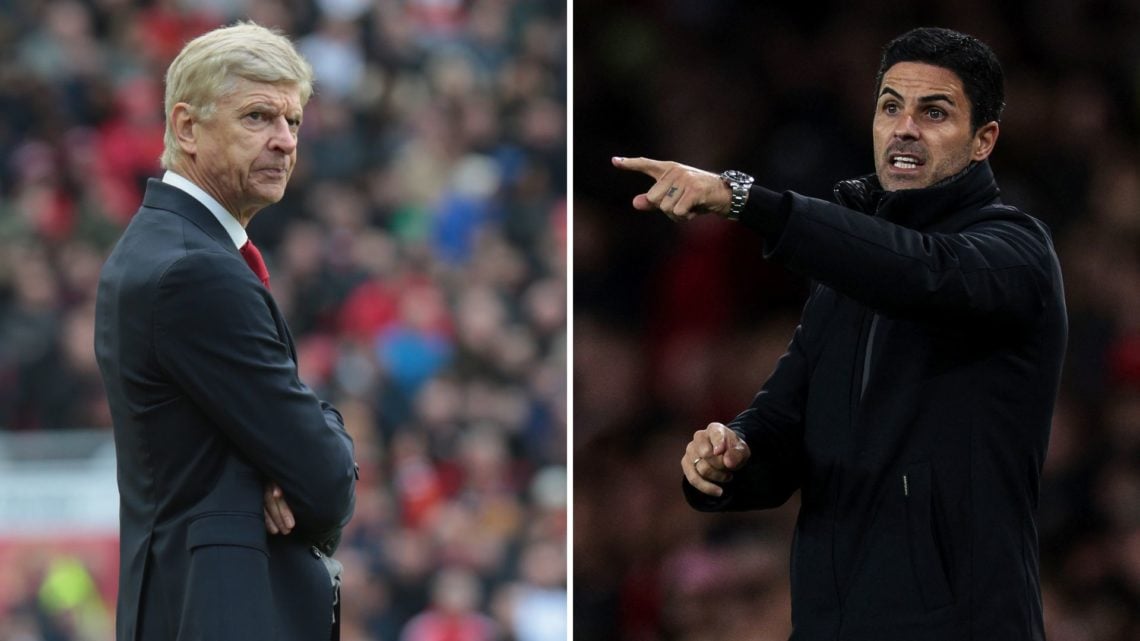
Mikel Arteta clearly values the Belgian’s experience, but Arsenal fans were torn over the Trossard news, and it may now be time for an old Arsene Wenger policy to be reintroduced.
Arsene Wenger’s Arsenal contract policy for players over 30
Back in the early years of Wenger’s reign at Arsenal, the club would refuse to hand out new contracts, or only offer limited deals, to players over 30 years old.
Players in that age bracket would not be given extensions beyond one year, and this helped keep the average age of the squad down, with Wenger allowing youth players opportunities to break into the first team.
He later relaxed this policy when it came to some of his older stars, and Arteta even spoke out against the club when he found himself in this situation during his playing days.
Mikel Arteta slammed Arsenal contract policy under Arsene Wenger
In May 2014, Arteta was 32, but a key player for Wenger’s side as vice-captain within the squad which went on to lift the FA Cup.
Arteta had a year left to run on his deal, but was keen on signing an extension beyond one year, and he hit out at the policy regarding players over 30.
“I don’t value players by age,” Arteta told The Guardian in 2014.
“Whether it is [Tomas] Rosicky or Jack Wilshere, I analyse many other things before age. Age can be an asset for the club. For me, a much bigger asset is someone who has played 125 games in three years compared to someone who has played 25, if he is 20 years old. That’s my opinion.
“I understand the club point of view: ‘Mikel is not a £25m player because he is not 22 any more.’ But I know what else I can give. So it’s to find the right balance between mentalities. We need to analyse and talk about it.”
Arteta was fierce in his view, and he even hoped that he could change Wenger’s mind over his policy.
“I know the history of this club with players over 30 and I don’t know if they are planning to change it or maintain it,” Arteta added.
“I will give them my opinion. I will talk to them this summer and see what they want to do. I am only going to stay if they really want me to stay and I feel productive.
“The day I feel like I can’t perform, I will be the first one to say: ‘Listen, you have kids here, 20, 25, who are much better than me. It’s my time to move on.’ They’re not going to have a problem with me with that.”
Arteta eventually signed a one-year extension to take his contract to 2016, and Wenger was proven right. The Spaniard hardly featured in his final two seasons due to injuries, before retiring at the end of his deal.
| Mikel Arteta’s Final Arsenal contract extension | Mikel Arteta’s Arsenal apperances |
| Before Extension: 2011-2014 | 124 |
| After Extension: 2014-2016 | 26 |
Arteta must now learn from Wenger’s policy, and apply it to two players within his own squad.
Mikel Arteta must not give long contract extensions to Leandro Trossard or Thomas Partey
Trossard and Thomas Partey are two of the oldest players within this relatively young Arsenal squad, and both have been criticised over the last few months.
Partey’s deal expires at the end of the current season, whilst Trossard’s runs until 2026. With this in mind, Arteta must be ruthless over their situations.
Partey is 31, and whilst he is in a strong vein of form, his injury record over the years means a new deal of any kind is a huge risk, as Partey is one of Arsenal’s highest earners.
Trossard is 29 and is seemingly declining in his performance levels, but a pay rise and an extension would make him incredibly difficult to sell in the future if he does not improve.
If Wenger was in charge, neither player would get an extension, or at the very maximum they would get one year deals, but Arteta’s insistence that their experience will be useful despite their performance levels or injury records, could end up costing Arsenal further down the line.
Receive a digest of our best Arsenal content each week direct to your mailbox


