

Arsenal are a team of superstars once again.
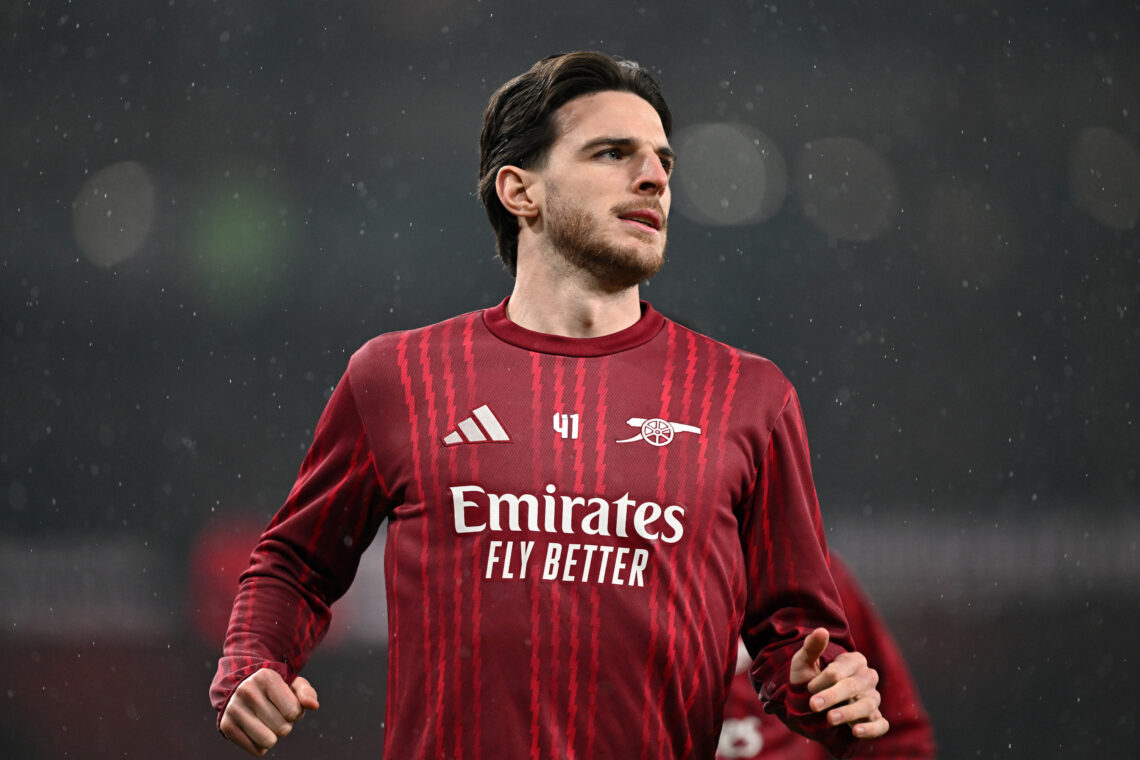
Alongside Bukayo Saka, Martin Odegaard, William Saliba and Gabriel, Declan Rice has brought the glamour back to the Gunners.
In their years in the wilderness, the club had several galacticos on paper but, ultimately, they failed to deliver consistently. With Arsenal into the final of the League Cup after last night’s victory over Chelsea and favourites in both the Premier League and Champions League, Rice and his colleagues are primed to do what their forebears could not.
Stan Kroenke has sanctioned massive investment to make Arsenal replete with superstars.
After the European Super League and years of underperformance, do you FINALLY trust Stan Kroenke?
It's been a bumpy ride, but the owner is starting to deliver

After encouragement from son Josh Kroenke, the owner has pumped nearly £400m of his own money into the club, with the Emirates Stadium now home to some of the best paid players on the planet.
The wages of players like Rice are routinely understated in the media. Arsenal’s payroll was £345m in 2024-25, per the latest edition of the Deloitte Football Money League released in late January.
After the January transfer window closed with the only outgoings being loans, their total committed net spend this season in the recruitment department meanwhile has been confirmed at around £250m, depending on whether all add-ons for additions like Viktor Gyokeres and Eberechi Eze are realised.
So how are Arsenal, who have been reliant on owners handouts in recent years, affording all of this without going back to the Kroenkes and asking for more cash?
“Commercial growth has been very impressive,” says University of Liverpool football finance lecturer, speaking exclusively to Arsenal Insider.
“There is a feel-good factor around the club. Performance and the commercial department appear to be complementing each other very well.”
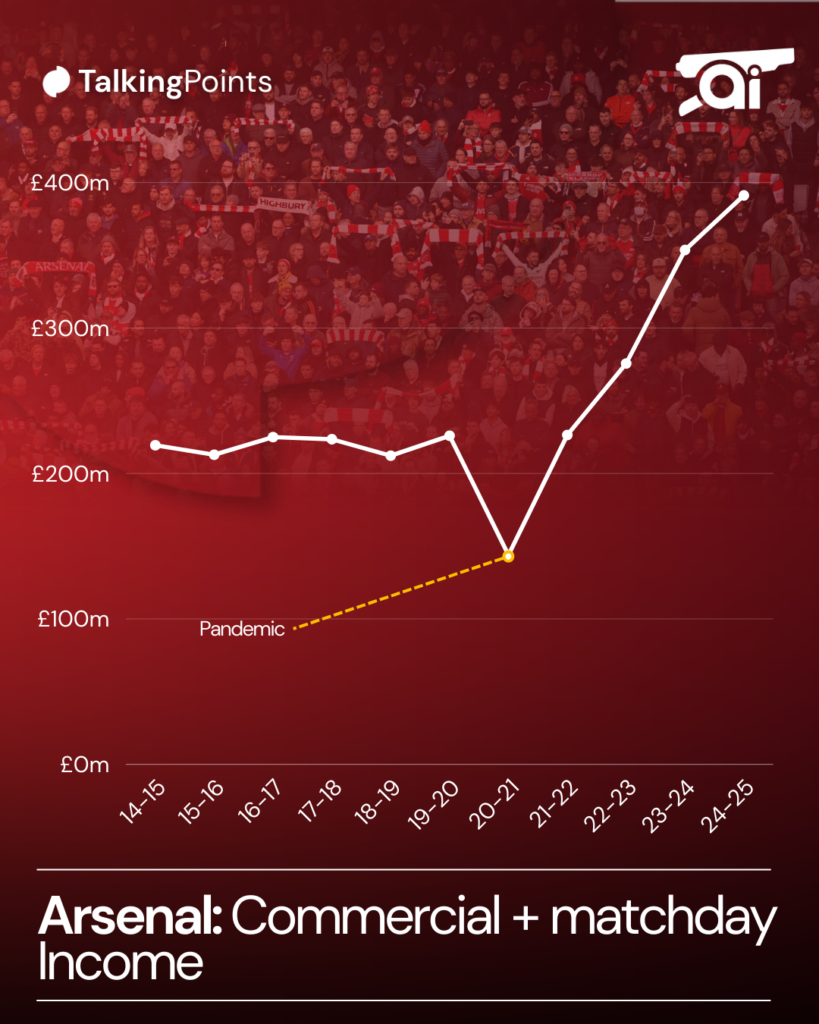
Arsenal’s revenue, according to the Deloitte figures, reached a club-record £710m last season.
While finishing 2nd in the Premier League and reaching the Champions League semi-finals for the first time in two decades yielded huge prize money, revenue from retail and sponsorship was the biggest growth factor.
In total, commercial income reached £271m, which was £48m higher than 2023-24 and almost double the sum the Gunners earned from the same category as recently as 2021-22.
According to Maguire, the star power of players like Rice has been a big driver here.
Arsenal’s commercial/matchday income is BOOMING
Apart from expanding the Emirates, what else can the Kroenkes do to increase revenue?
And the Price of Football podcast host suggests that the midfielder and his peers’ contractual image rights – which are the sum clubs pay players to use their likenesses in marketing and merchandise – will have been calibrated to maximise the value of the players’ individual brands.
“If you travel on the tube, adverts involving Arsenal players are everywhere. Presumably, player contracts will have been engineered to allow them to get rewards from this as well.
“Arsenal have people at the club now who are very attractive to commercial partners. The likes of Declan Rice in particular are very good assets in a Premier League which is lacking superstars.
“Another thing that has gone slightly under the radar is the success of the women’s team. They are getting crowds of 30,000 on a regular basis, which shows that smart marketing and targeting a certain demographic can be very beneficial.
“Arsenal have tapped into a broad market. The boxes and hospitality packages all sell out as a result.”
Receive a digest of our best Arsenal content each week direct to your mailbox