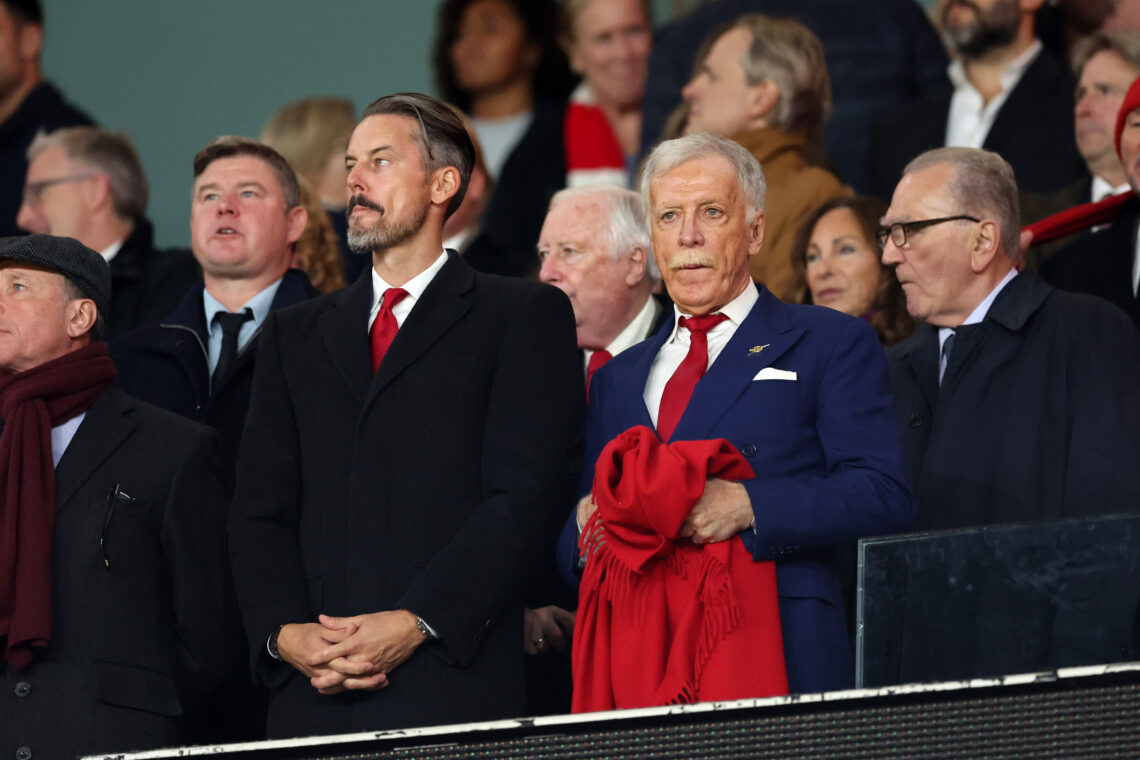


It is nearly 20 years since Stan Kroenke first invested in Arsenal.
After buying a small equity stake shortly after Arsenal moved to the Emirates Stadium, the Missouri-born billionaire gradually increased his holding in the club, eventually getting the better of Alisher Usmanov in a fight to take full control. By 2018, he owned 100 per cent.
Since that date, things have changed a lot. During the takeover tug of war, Usmanov framed himself as the man who would dig deep to reinstate Arsenal as a superpower, while Stan Kroenke was cast as a more miserly business type whose focus was making the club self-sufficient, even at the expense of glory on the pitch.
But since 2018, Kroenke has injected £334m. And when the accounts for 2024-25 are released, that figure is likely to have risen somewhat. For context, only two Premier League sides have received more owner funding in the last five years.
After the European Super League and years of underperformance, do you FINALLY trust Stan Kroenke?
It's been a bumpy ride, but the owner is starting to deliver

Kroenke certainly isn’t investing out of charity, however. That money has come in the form of loans which, in theory, he can one day recall, although that will likely be when he eventually sells the club. What’s more, spending big was a necessity to get Arsenal back in the ultra-lucrative Champions League, which in turn reduces the reliance on Kroenke Sports & Entertainment for external funding.
The Gunners have supersized their commercial revenue in recent seasons too, while Josh Kroenke and the boots-on-the-ground team in North London continue to ponder expanding the Emirates Stadium.
Along with those underlying business plans, ending a 23-season wait for a Premier League title would go a long, long way to ensure that Arsenal can do far more than subsist on their own revenues.
With a good run in the Champions League and maximum domestic prize money, Arsenal could be pushing £800m in revenue in 2025-26. That would be an English record – and only Real Madrid and Barcelona have hit those heights worldwide.
Late last week, Arsenal filed official paperwork at UK business registrar Companies House showing that they had renewed their working capital facility with Barclays, which acts similarly to an overdraft, allowing the club to borrow up to £100m.
But rather than being due to Arsenal – who have blasted £250m net this season – spending beyond their means, the facility is used to cover seasonality of cash flows.
“You have a wage bill that has to be paid every month,” University of Liverpool football finance lecturer Kieran Maguire explains in exclusive conversation with Arsenal Insider.
“The money coming into the club is much more erratic. You get a big chunk from season ticket sales and Premier League prize money at the start of the season. That helps in the transfer market. But then you could have a month in November with only one home fixture, so you have almost no matchday income. On the back of that, you do sometimes need a facility like this to manage cash flow.”
And what about the wider context? Are Arsenal now in a position where they don’t need to rely on external investment from Kroenke?
“They are now back to being regular participants in the Champions League,” says Maguire, “and they have recovered on the pitch at the right time with the new format, which is worth £40-60m to them as a bare minimum.
“That creates a virtuous circle because it gives you a competitive advantage. We have seen that with the depth of their squad, which is a result of the transfer strategy in the summer. They have that interchangeability and the ability to absorb suspensions and injuries.
“The money from Kroenke is sort of bank of mum and dad – there is no pressure to repay it. The fact that they haven’t drawn down on the Barclays facility indicates that the club is pretty well run in terms of cash flow.
“The big issue is whether they are going to expand the Emirates Stadium.”
Arsenal are said to be looking at increasing capacity at the Emirates to at least 70,000, though some reporting has suggested 80,000 is a possibility too.
What capacity should Arsenal expand the Emirates Stadium to?
70k is on the cards, but should we be aiming BIGGER?

When Arsenal moved away from Highbury, it was with the aim of making the club entirely financially self-sufficient. But with oligarchs, sovereign wealth and private equity having entered the game since 2006, football has changed.
Circularly, it seems like the Gunners need to address the stadium issue again in order to give themselves the best chance of self-sufficiency in the 2030s and beyond.
Receive a digest of our best Arsenal content each week direct to your mailbox