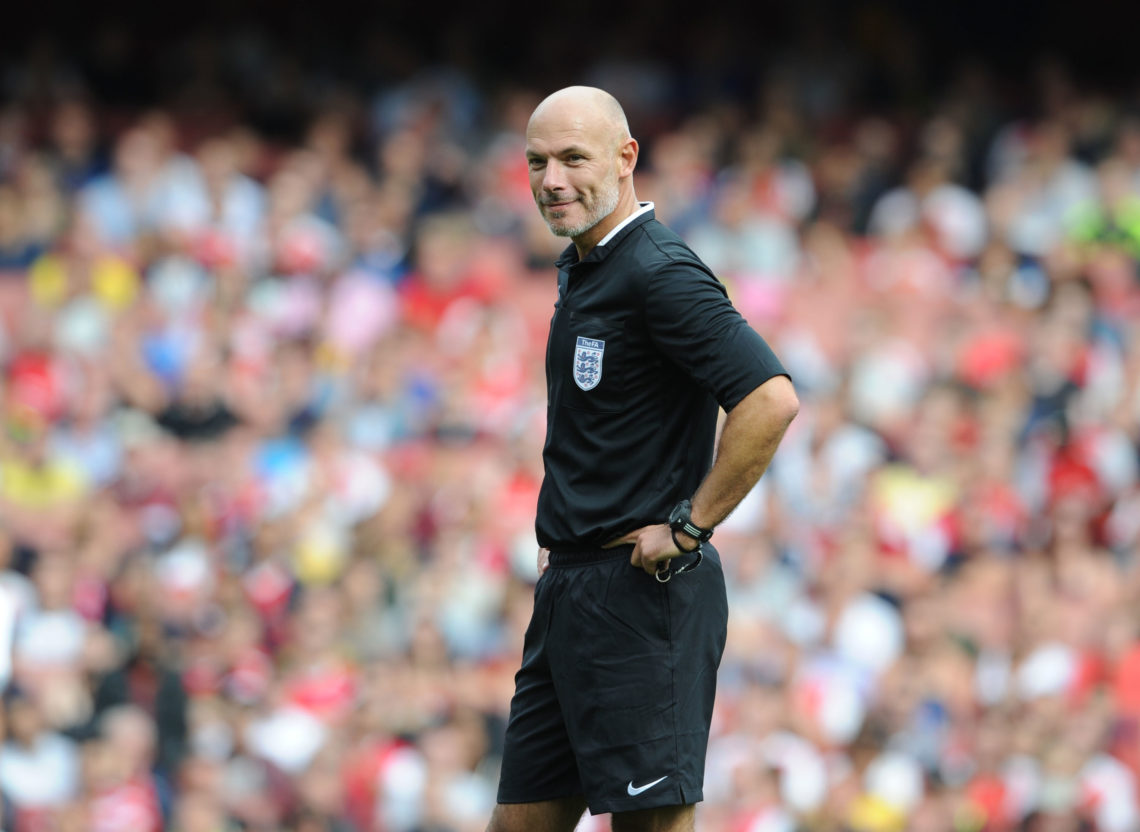


PGMOL chief Howard Webb has broken his silence over the red card for Myles Lewis-Skelly in Arsenal’s win over Wolves, claiming it was a mistake, but defending referee Michael Oliver in the process.
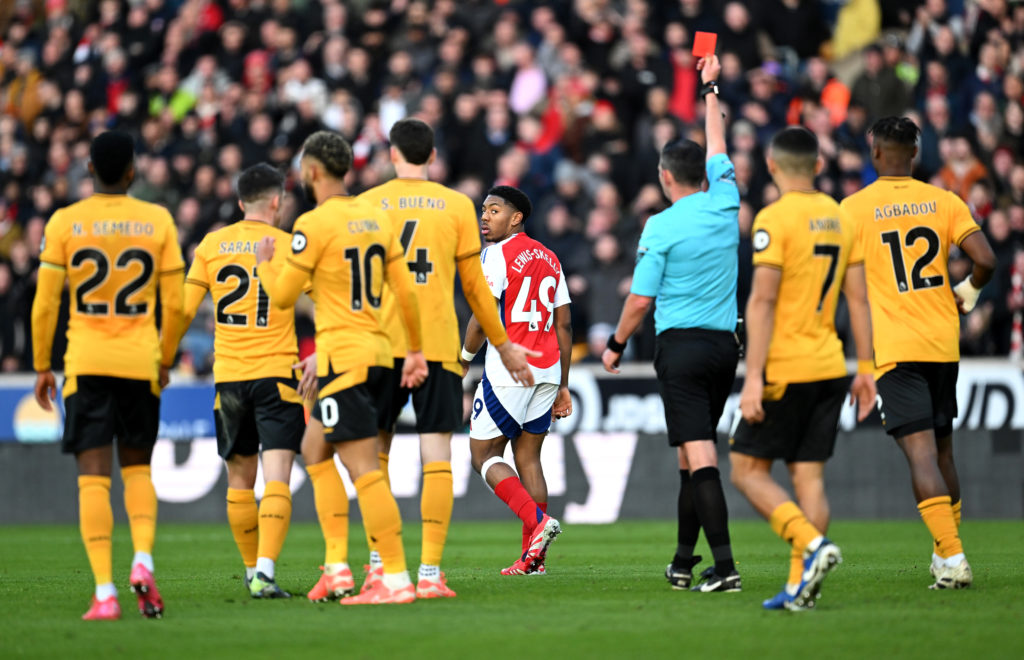
The Gunners were reduced to ten men in the first half of the match when an attacking corner turned into a counterattack for the hosts in a quick turnover.
Looking to stop the attack with a petulant trip, Myles Lewis-Skelly was shown a red card for what was deemed as serious foul play.
Arsenal were far from happy, as the contact didn’t seem to meet the threshold needed for a forceful challenge.
Despite that, the Gunners went on to win the game, but there were plenty of talking points surrounding the decision from Michael Oliver and the VAR team.
Lewis-Skelly’s red card was eventually overturned after an independent panel deemed it a mistake, though that didn’t stop many from being frustrated.
VAR audio from Arsenal red card revealed
One of the main talking points to come from it were questions over whether the VAR were unwilling to overturn the decision on review.
That has been cleared up a bit since as revealed on the latest episode of Match Officials Mic’d Up, where the VAR audio revealed all.
The audio started with Michael Oliver saying: “I’m going to go red card, mate. Red card on the ankle. Red card, serious foul play.”
VAR: “Just checking the red card for serious foul play. OK, it’s for serious foul play, not DOGSO [Denying an Obvious Goalscoring Opportunity]. OK, for me the contact’s on the top of the foot.”
Assistant VAR: “I think he catches him on the side of the ankle first. It glances off the side of the ankle down onto the foot. So the first impact is more that Achilles area.”
VAR: “So first impact is on the Achilles, on the shin.”
Assistant VAR: “With no chance of playing the ball.”
VAR: “So, it’s high up above the ankle then it comes back down. OK, just get me the number please.”
Assistant VAR: “It’s number 49, Lewis-Skelly.”
VAR: “Michael, confirming the on-field decision of red card for serious foul play for Myles Lewis-Skelly. Away, 49. Check complete.”
It shows that, despite theories about the VAR potentially being scared to overturn the decision, the process was clear-cut.
Instead, they agreed with the call made by Oliver on the field, believing the high contact and lack of ball being played resulted in it being serious foul play.
It has since been deemed a mistake, something Webb himself wanted to touch on in the show.
Howard Webb defends Michael Oliver after Arsenal red card
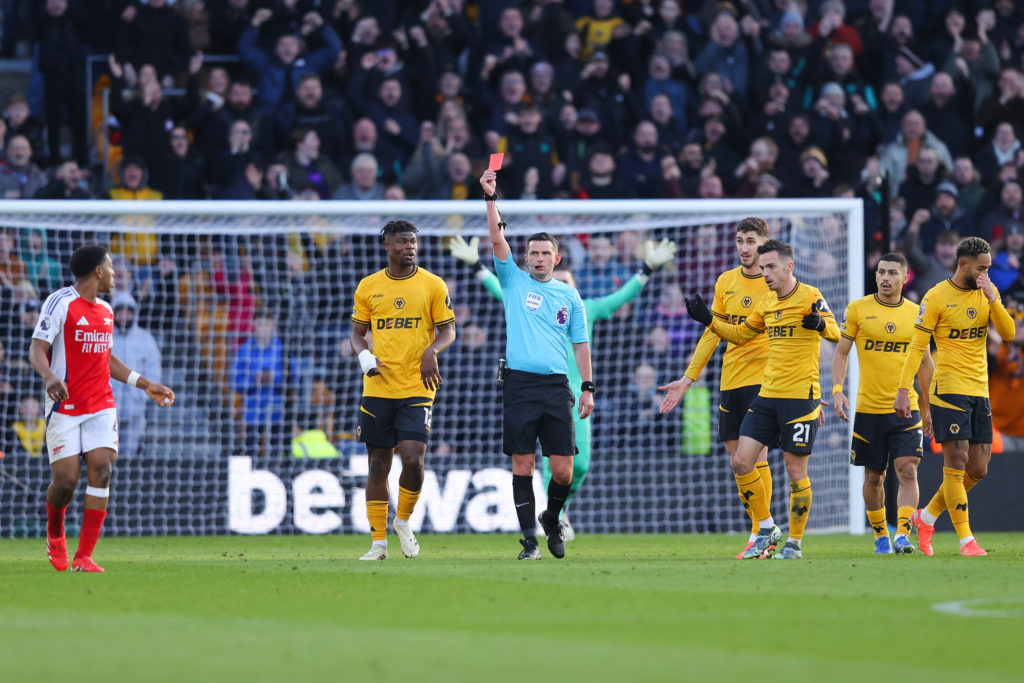
When discussing the decision in review, PGMOL chief Howard Webb went on to reveal it was a mistake, but backed Michael Oliver in his decision-making.
On the mistake, he said: “From the outset, we would prefer a yellow card in this situation, clearly the referee on the day felt the actions of Myles Lewis-Skelly, he saw the player moving in towards an opponent without any ability or intention of playing the ball – with the intention of stopping the opponent.
“And the referee sees a raised foot make high contact and the opponent went down. The referee felt it was serious foul play, the VAR checked the footage to see if the call was clearly and obviously wrong and he felt it wasn’t – seeing that the contact was quite high up on the leg.
“But we know that for serious foul play, we need excessive force or brutality and what we see here is that high contact [just] glancing and coming off the leg quite quickly.
“So for that reason, everybody pretty much in the game has formed the same conclusion that this is falling short of serious foul play, because of that glancing contact, because the studs don’t really go right into the leg, they glance in before coming down onto the foot.”
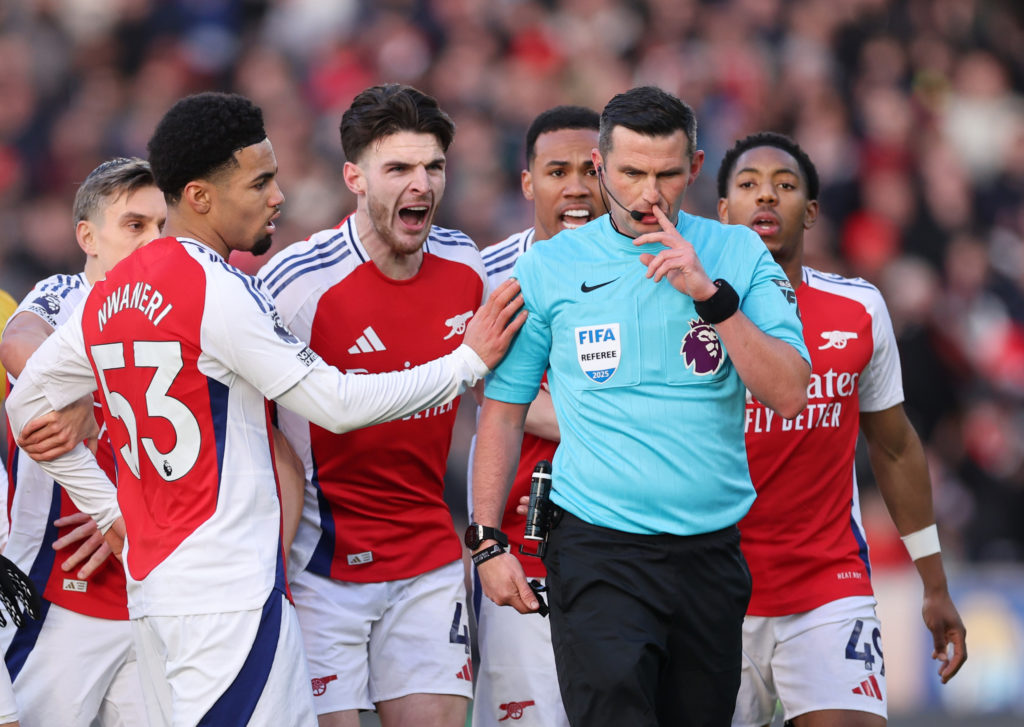
Some of the reactions after the incident saw pundits label the decision as “one of the worst” many had ever seen.
Webb moved to defend Oliver though, as he responded: “There are some considerations that might support a red card, but there are a whole host of others that say it is not quite there, so on balance we would rather this had been a yellow card.
“The VAR didn’t want to re-referee the situation, they were mindful of the referee’s call standing unless it is clearly and obviously wrong. They felt it wasn’t at that level on the day and decided to leave it as a red card on the field.
“I’ve heard this described as a really horrendous officiating decision. It’s not! I understand why the referee saw this on the day as a serious foul-play action.
“We have to be careful about slowing things down and freeze-framing things. We’ve talked about not doing that, it can distort reality. We have to look at it in full speed, it is glancing [studs] and does come off quite quickly.
“But it’s an understandable on-field decision. Yes, we feel the VAR should have been involved, but at the same time, I can kind of understand why that didn’t happen in the moment.”
Arsenal managed to get out of the situation without it denting their Premier League title hopes too much, filing it away as a mistake that was, fortunately, not costly in the end.
Receive a digest of our best Arsenal content each week direct to your mailbox